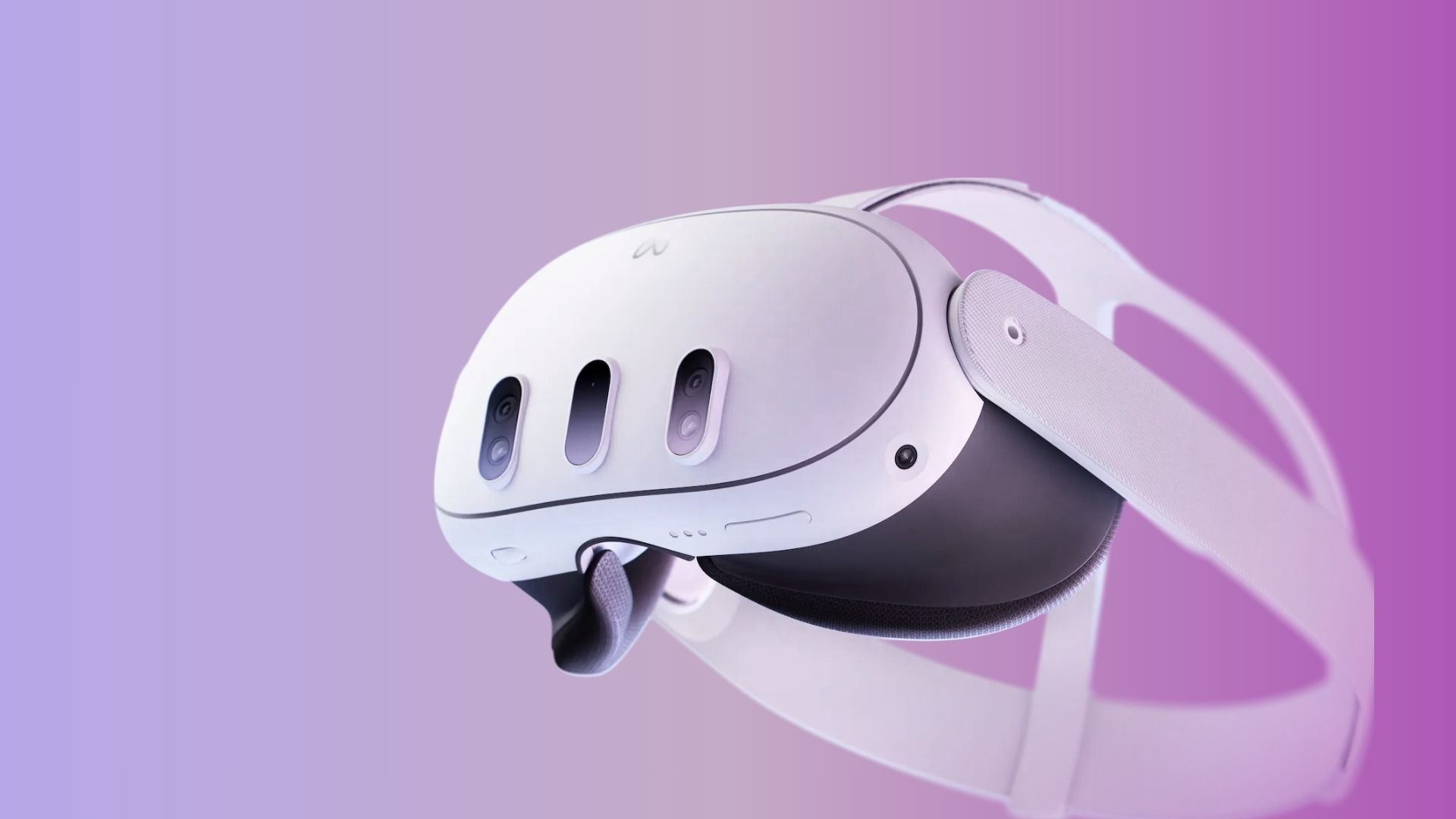
Meta XR Design
Introduction
Summary
This project is an exploration of how interaction, emotion and perception reflect in reality. Using the Meta Horizon Worlds software in the Meta Quest3 and the desktop app, I am building an interactive world that visualizes my thinking process, experiences and passions; a reflection of my mind. With experimenting with personalized AI generated elements and Typescript coding in VS Code, I want to challenge how digital worlds show identity and creativity. I also just want to have fun with this project.
Tools
Meta Horizon Worlds, Typescript
Role
XR Designer
Timeline
October 2025 - Present
Concept & Research
Concept
I initially wanted to create a simple app that used AI to teach design topics and provide personalized learning experiences for college students. I still think that’s a great idea. But while brainstorming, I noticed I was making a lot of mind maps; connecting ideas with each other to visualize my thoughts. During critique sessions, I came up with the idea to design a website that helps others create three-dimensional mind maps with images and text.
Over time, I realized this project kept circling back to the theme of the mind and user experience. That’s when the idea came to me. I will build a world that represents my own mind. I had first planned to develop it as a website using Three.js, but then I realized it would be even more immersive if users could actually explore my mind in a virtual environment.
Research
I began this exploration with the support of Professor Vickie, she guided me through rethinking and refining my ideas from the start. She gave me the book "Learning to See" by Keith Sawyer allowing me to appreciate iterative design decision making in my work. Her feedback helped me shift from a traditional app concept toward a more immersive XR experience.
To learn the basics of world building and scripting, I watched several YouTube tutorials and created two small practice worlds. These experiments taught me how movement, space, and interaction shape how users feel inside a virtual environment.
I also discovered the Horizon Worlds Desktop Editor making development more accessible and technical. I started writing TypeScript to add triggers and movement, and I experimented with the AI-powered world-generation feature to build a camp-themed world that blended AI assets with my own custom design and logic.
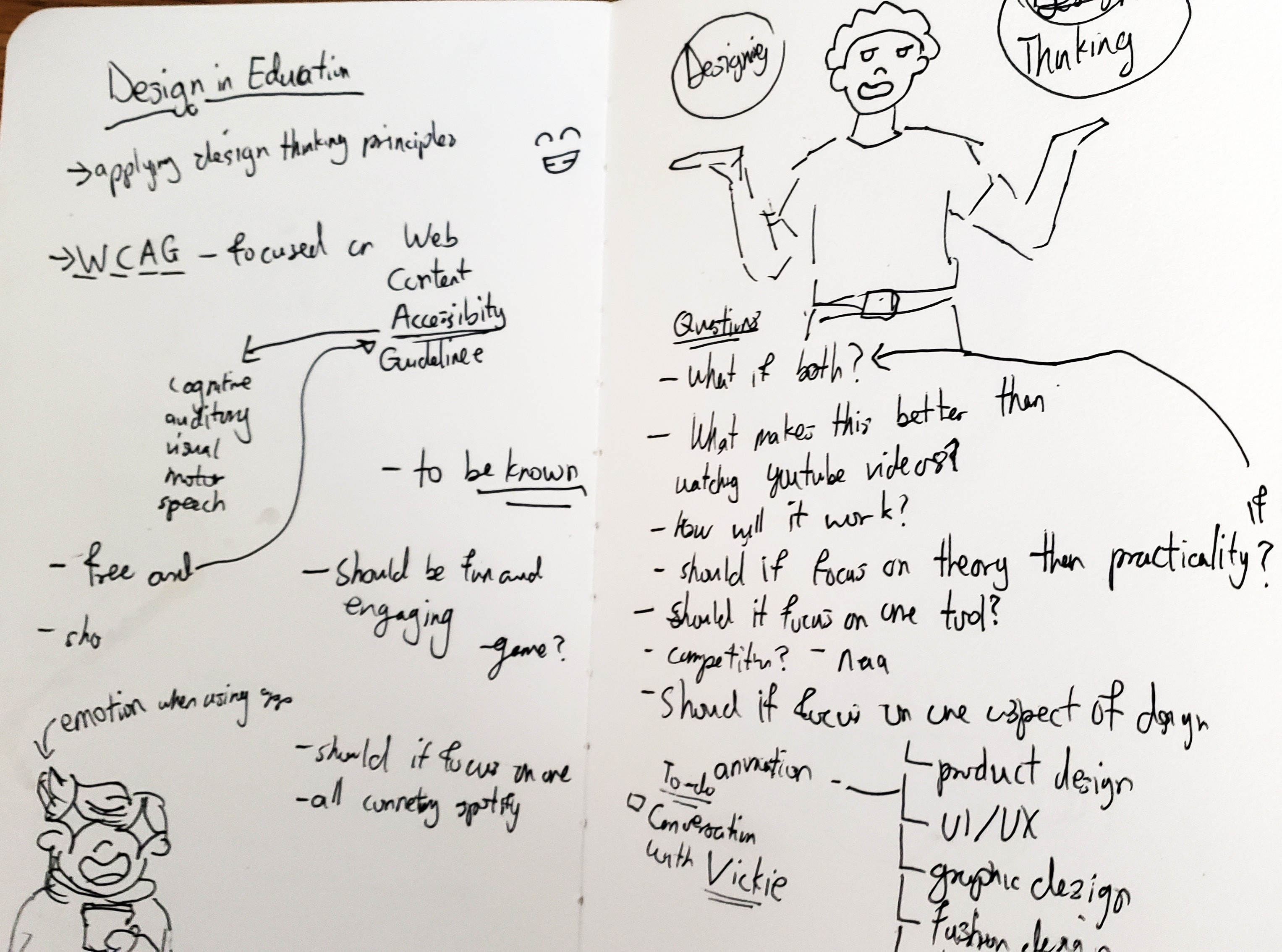
Brainstorming Session for my Design Education App
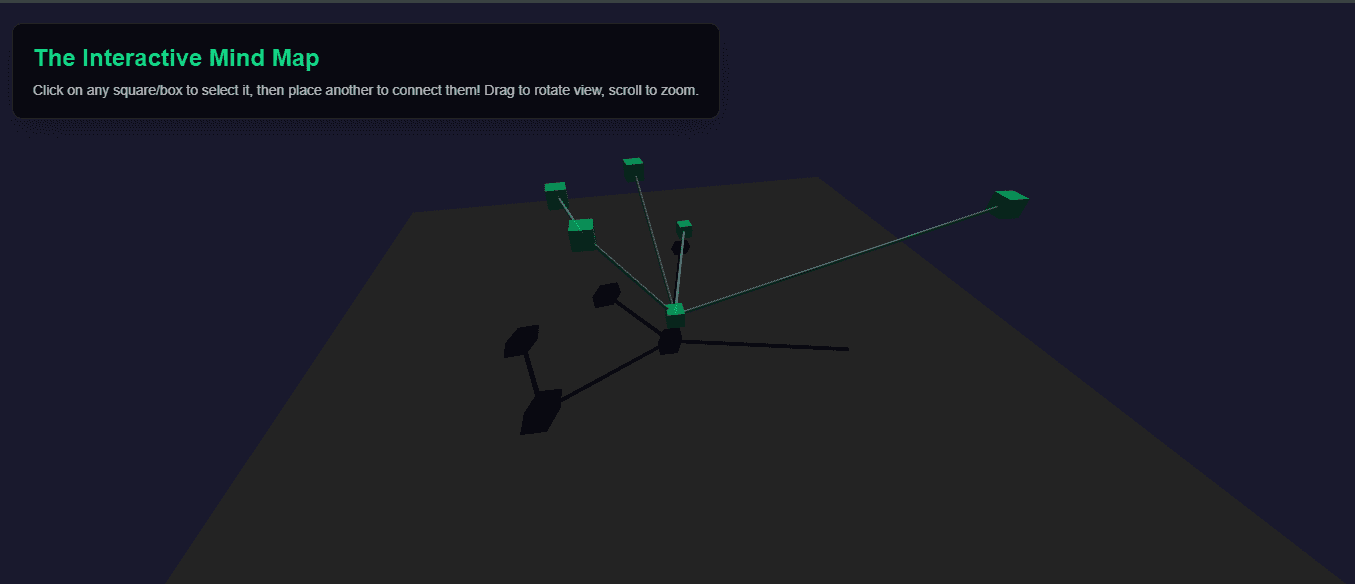
3D Mind Map Website
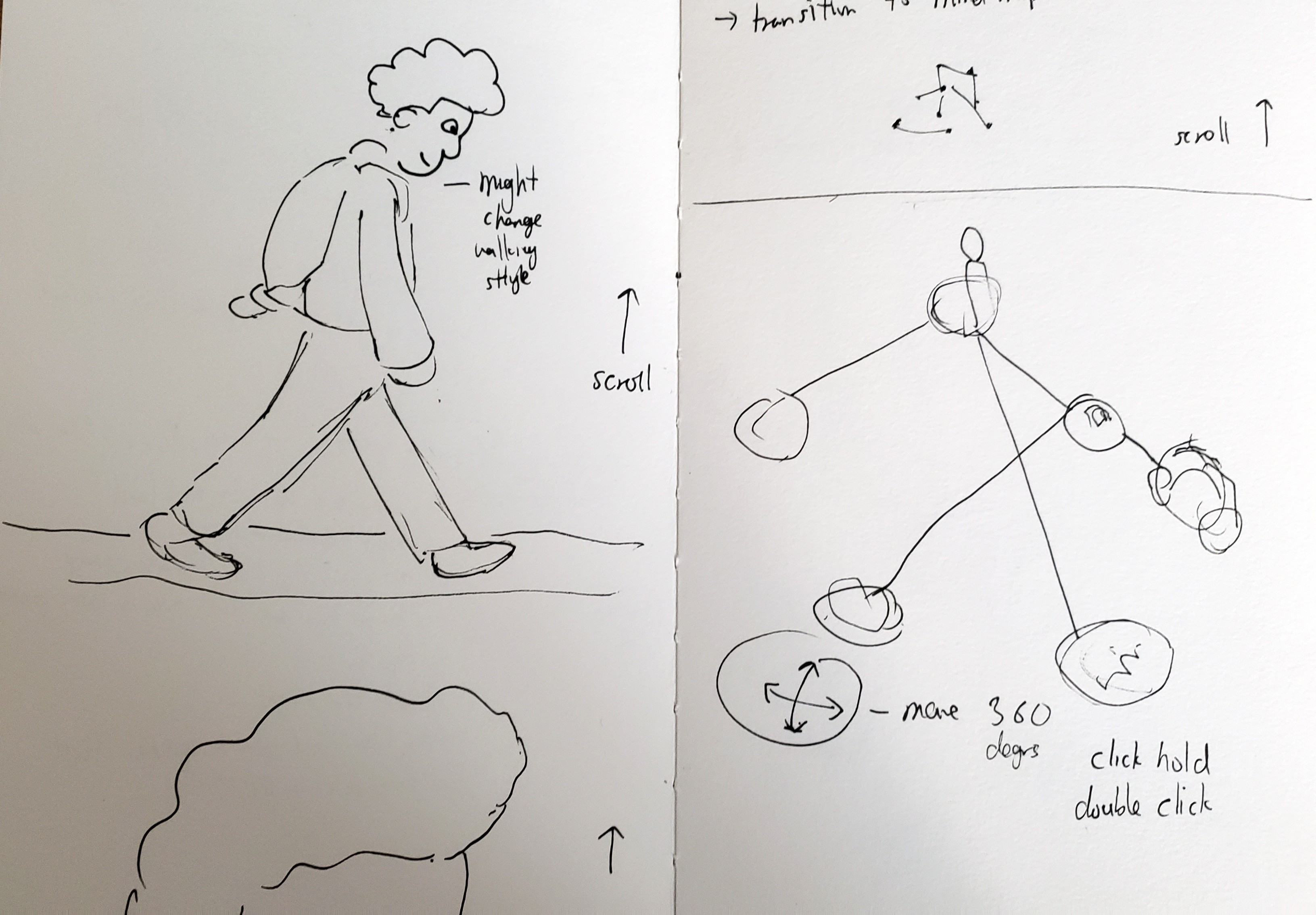
Plan for My Mind Map Interaction
Worldbuilding
Process
In building, I often go for a particular theme which guides my color and layout decisions. For instance creating a camp scene would need dark colors with warm colors for fire. I also experiment a lot with the space and composition of worlds, testing different layouts based on my own intuition and how I think users may explore them. Below is a video showing my world building process.
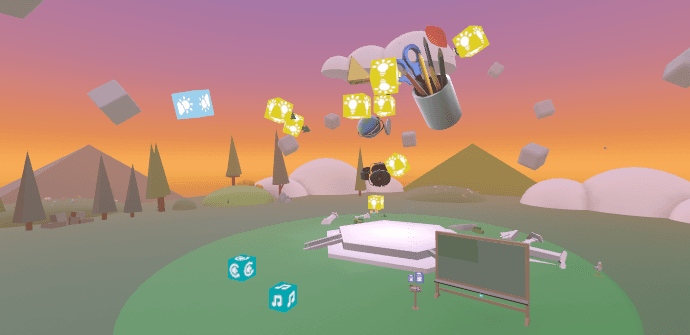
In the pictures below, I made these assets like headphones, sandwich heart and globe represent, my love for music, food, people I care about and my experiences all over the world. The rotation represents how these things are constantly on my mind. I want to add a click feature where each item takes you to that world. I also want to add a random thoughts feature showing how I can sometimes get random ideas and how I remember them.
Interactivity & AI
The Creative Process
A major part of this exploration has been experimenting with interactivity and understanding how users engage with the world built. I have tried clickable items, rotating objects, and sound effects to bring a sort of playful and dynamic feel to it. I often think about how users can discover joy in small, unexpected movements or sounds.
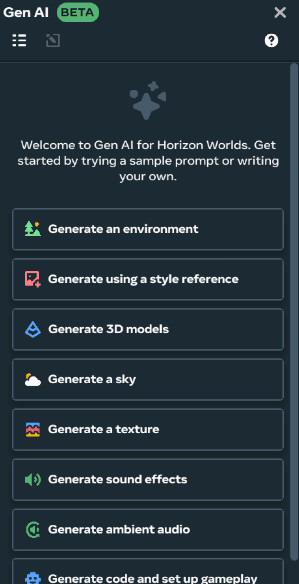
For world generation, I have also been exploring Generative AI tools integrated in Horizon Worlds. I use prompts that describe a setting, time, or atmosphere to create environments I can later customize through design and code. For instance, I made a quiet camp at night entirely out of the Gen AI feature in the Horizon worlds. I will soon introduce autonomous AI-driven NPCs, each reflecting different personalities or thoughts within my mind. This combination of AI and interactivity allows the world to feel alive and personal, showing the inner complexity that inspired the project in the first place.
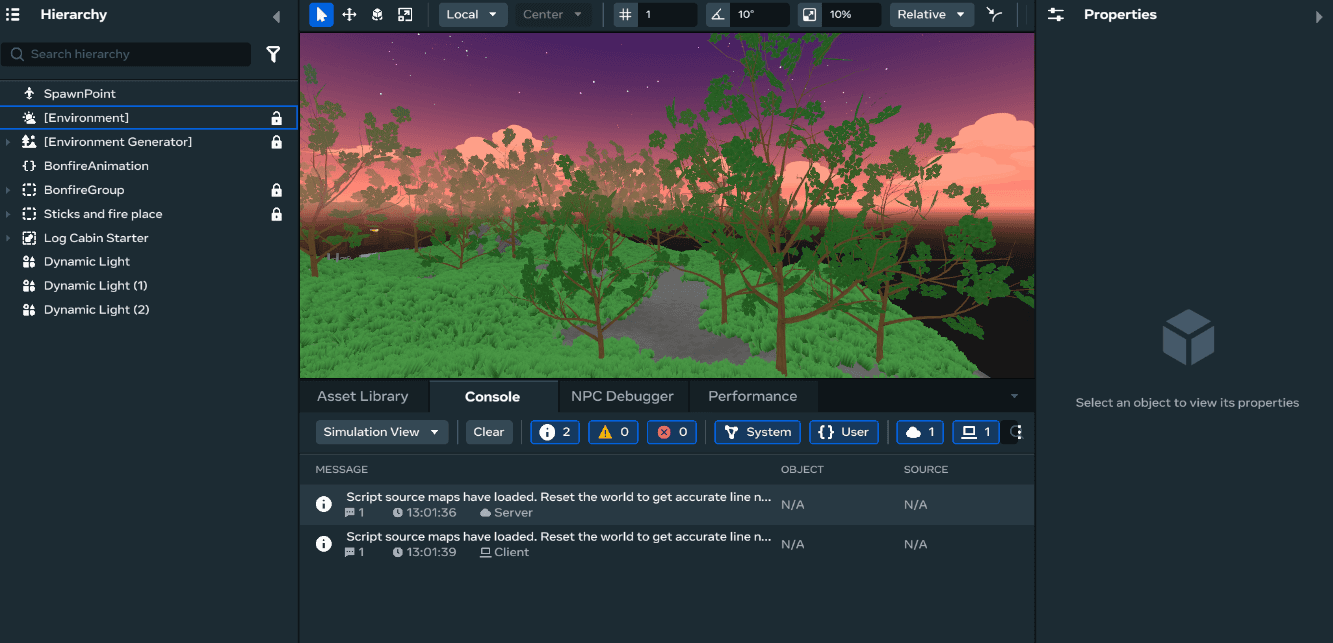
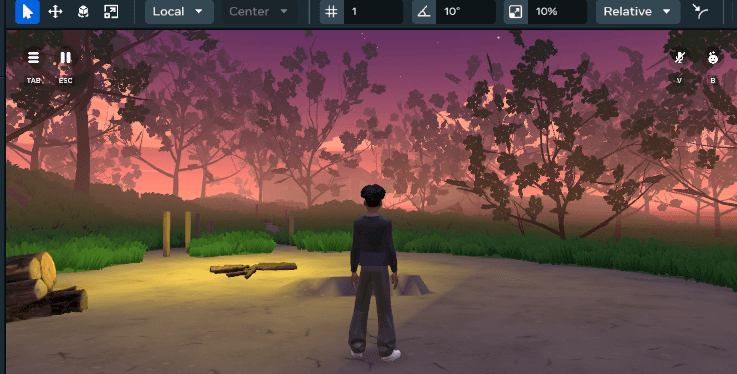
Camp Night Built in The Horizon Worlds Desktop Editor
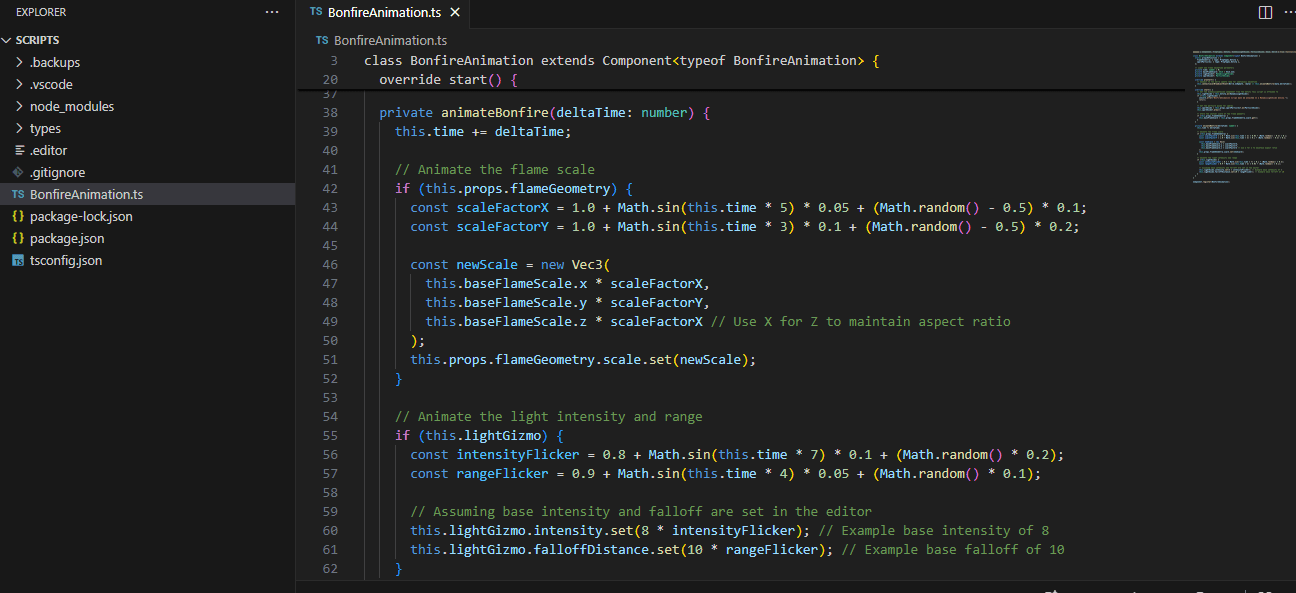
Code Snippet for the Bon Fire Animation
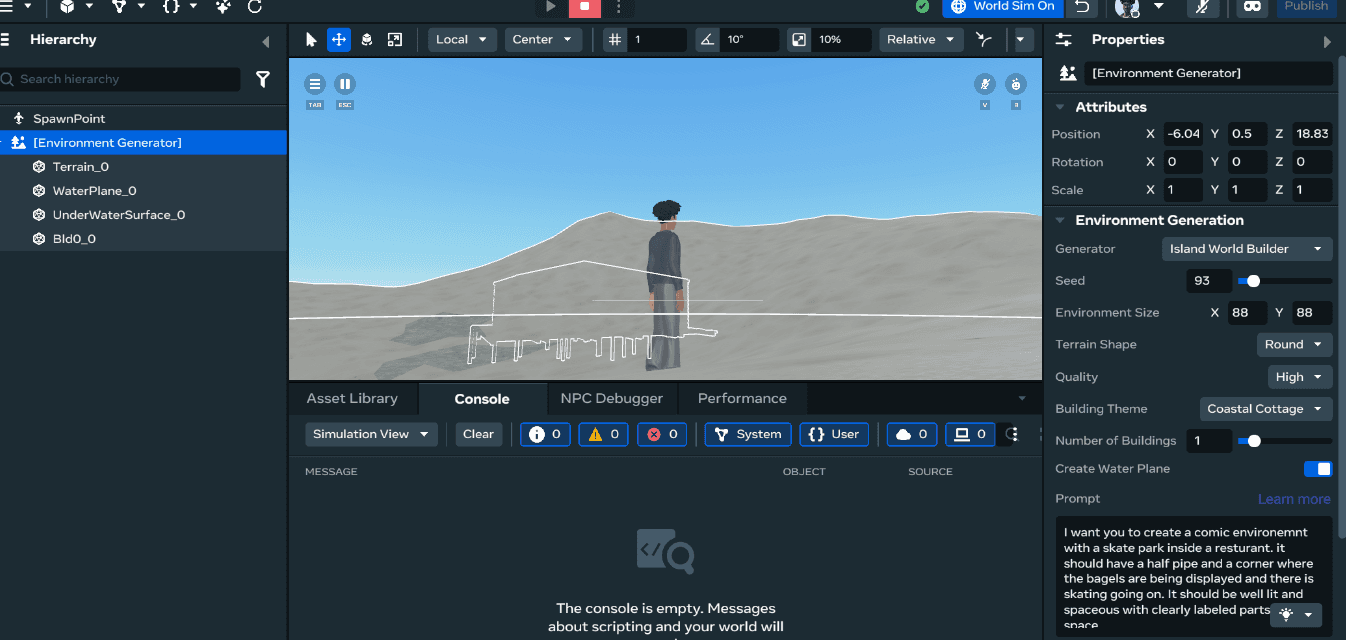
A World Built with AI
Reflection
These are the ongoing lessons I have learnt in this project.
Creative Growth: I continue to learn to combine playfulness with structure through spatial design and interactive storytelling.
Technical Confidence: I gained hands-on experience using TypeScript, Horizon components, and AI debugging tools to build functional VR interactions.
Design Perspective: I discovered how XR can express emotion and identity while designing spaces that reflect thought, feeling, and personality.
Collaborative Thinking: I have realized how AI can act as both a creative partner and a design assistant, shaping environments through prompts and iteration.
Next Steps
This is my plan for the next phase of design for my project.
AI-Driven NPCs: Introduce autonomous, personality-based characters representing different parts of the mind.
Expanded Interactivity: Add gesture, movement, and voice-based triggers to deepen user immersion.
Multi-World System: Connect several themed worlds into one cohesive mental landscape.
Exhibition Build: Prepare a playable version for future showcases or portfolio presentations in Horizon Worlds.